How Does an Energy Storage System Work?
Energy storage systems (ESS) are transforming how we manage electricity, enabling a smarter and more efficient way to harness renewable energy. In this blog, we’ll...

A short and straightforward answer:
a typical residential LiFePO4 (LFP) energy storage battery can last around 10 years, or 3,000+ charge cycles, and often more under proper use.
But what does that really mean, and how does LFP compare with other battery types? Let’s break it down.
1. What Is a LiFePO4 Battery?
How Is It Different from AGM / Lead-Acid Batteries?
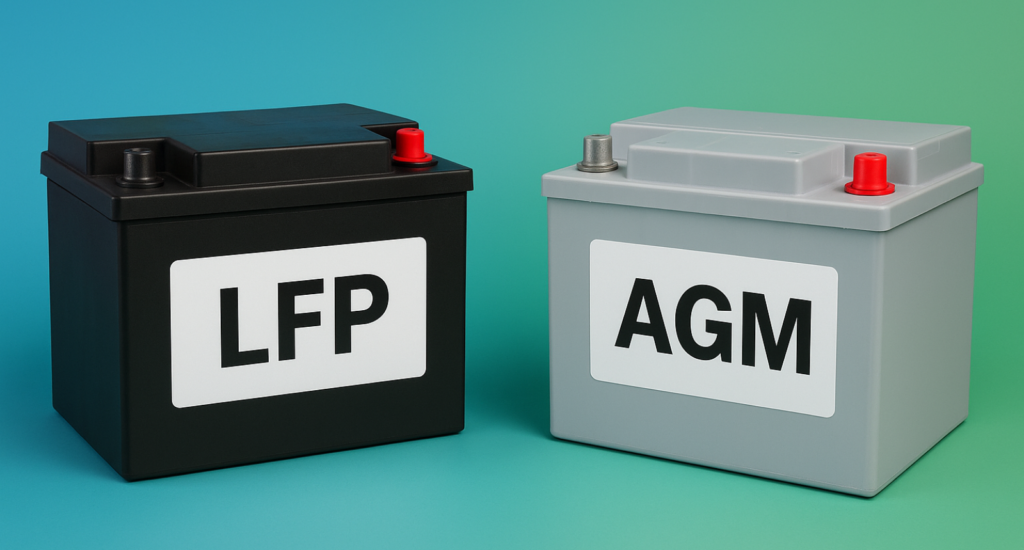
A LiFePO4 battery, also known as lithium iron phosphate (LFP), is a lithium-ion battery chemistry designed for long life, safety, and stable performance.
AGM (Absorbent Glass Mat) batteries, on the other hand, are a type of lead-acid battery. They are widely used due to their low upfront cost, but they come with clear limitations in lifespan, usable capacity, and weight.
Comparison: AGM vs LiFePO4
| Parameter | AGM (Lead-Acid) | LiFePO4 |
| Cycle life | 500–1,000 | 3,000–5,000 |
| Weight | Heavy | ~25% of AGM |
| Usable discharge | ≤50% | Up to 100% |
| Charging speed | Slow | Faster |
| Cost (long term) | Lower upfront | Lower over lifetime |
| Temperature tolerance | Better | Weaker in cold |
While AGM batteries may handle cold temperatures better, LFP batteries clearly outperform them in cycle life, usable energy, efficiency, and overall lifetime value.
2. How Does LiFePO4 Compare with Other Lithium-Ion Batteries?
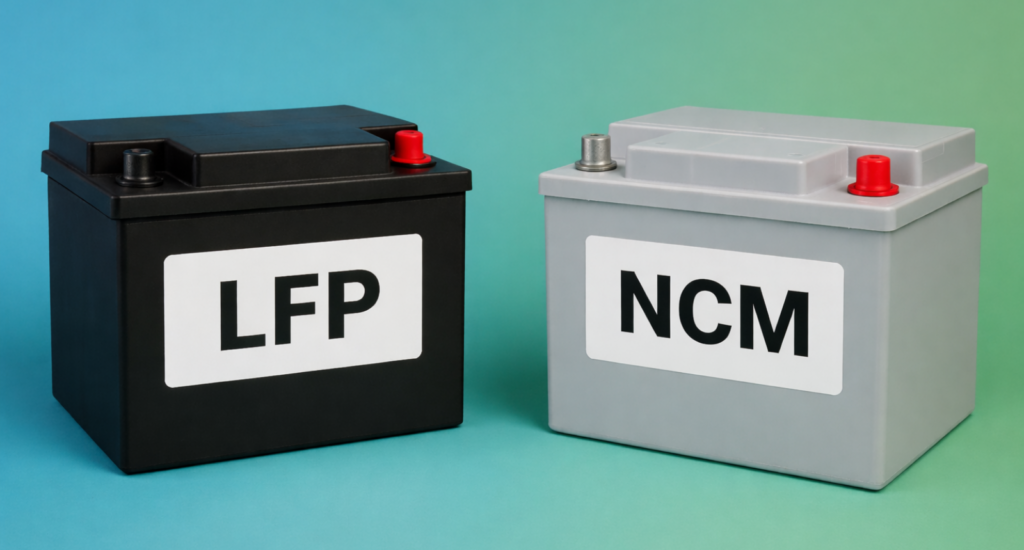
When people say “lithium-ion battery,” they often refer to ternary chemistries such as NCM (nickel-cobalt-manganese) or NCA (nickel-cobalt-aluminum).
These chemistries are known for higher energy density, which makes them popular in compact electronics and performance-oriented electric vehicles. However, higher energy density usually comes at the cost of shorter lifespan and lower thermal stability.
Comparison: NCM vs LiFePO4
| Parameter | NCM | LiFePO4 |
| Cycle life | 800–1,000 | 3,000–5,000 |
| Energy density | ~30% higher | ~30% lower |
| Discharge performance | Fast | Nearly on par |
| Charging speed | Fast | Nearly on par |
| Cost | Higher | Lower |
| Temperature performance | Better | Weaker in cold |
In short, NCM focuses on performance and size, while LFP focuses on longevity, safety, and cost stability, which is why LFP is widely adopted in residential energy storage and commercial ESS.
3. Where Does the Data on LFP Battery Degradation Come From?
There have been numerous studies on both LFP and NMC battery degradation, conducted in Europe, the United States, and China.
Experimental research shows that LFP battery capacity typically degrades in a linear and predictable manner. Even after thousands of cycles, LFP cells often retain over 80% of their original capacity across different states of charge and temperature conditions.
Thanks to the massive adoption of EVs and energy storage systems in China—and rapid growth in Europe and the U.S.—both LFP and NMC technologies have continued to improve.
In real-world applications today, battery lifespan often exceeds earlier laboratory expectations.
4. Daily Practices That Help Extend Battery Life
Battery lifespan is not just about chemistry—it’s also about how you use it. Key factors include:
Good system design and proper usage habits can significantly extend real-world battery life.
5. Can a Battery Still Work After 3,000–5,000 Cycles?
Absolutely.
A battery does not suddenly “die” after 10 or 15 years. Instead, it gradually loses capacity. While it may no longer perform like a brand-new unit, it can still function reliably with reduced energy storage.
This characteristic also supports today’s circular and low-carbon economy. Decommissioned EV batteries, which often retain around 70–80% of their original capacity, can be repurposed effectively for stationary energy storage.
Final Thought
LiFePO4 batteries are not about chasing peak performance—they are about long life, stability, and predictable aging. For residential and stationary energy storage, that reliability often matters more than anything else.
 by
by