Dying EV Batteries Power a Circular Economy
China has unveiled the world’s first zero-carbon building that combines solar power, retired electric vehicle (EV) batteries, and cutting-edge digital technologies. This innovation not only...


In 2026, residential battery storage has become a practical tool for solar installers and distributors across Thailand, the Philippines, and the broader Middle East. With declining feed-in tariffs, volatile grid electricity prices, and varying levels of grid reliability in many areas, homeowners are increasingly looking for ways to maximize the value of their solar systems.
A well-designed home battery backup system captures excess solar energy during the day and makes it available when needed — at night, during peak tariff hours, or when the grid is unstable. For many households, this translates into measurable savings: reduced electricity bills, lower dependence on expensive peak-rate power, avoided generator fuel costs, and the ability to charge EVs using stored solar energy instead of grid power.
How does it actually work? Solar panels generate DC electricity that a hybrid inverter converts for immediate home use or for storage in the battery. When production exceeds immediate demand, the excess charges the battery. The battery management system (BMS) continuously monitors voltage, temperature, and state of charge to ensure safe and efficient operation. When solar output drops or the grid is unavailable or expensive, the inverter draws power from the battery to supply critical or whole-home loads.
For installers and small distributors, understanding these mechanics — and being able to communicate the real dollar value clearly — helps close more sales and reduces post-installation service issues. In markets like Thailand and the Philippines, where solar adoption is high but export compensation is declining, battery storage turns “wasted” daytime generation into valuable nighttime or backup power. In the Middle East, particularly in areas with frequent power outages, it provides essential energy security while helping homeowners avoid the impact of surging diesel and generator fuel prices.
This article explains the main battery types available in 2026, what really determines long-term performance and savings, the most common use cases with realistic dollar-saving examples, and practical guidance for both professionals and end customers.
Common Types of Batteries for Home Energy Storage
In 2026, Lithium Iron Phosphate (LFP) remains the dominant chemistry for residential systems due to its safety, long cycle life (often 6,000–10,000 cycles), and improving cost-competitiveness. Here are the four main form factors you will encounter when recommending systems to customers:
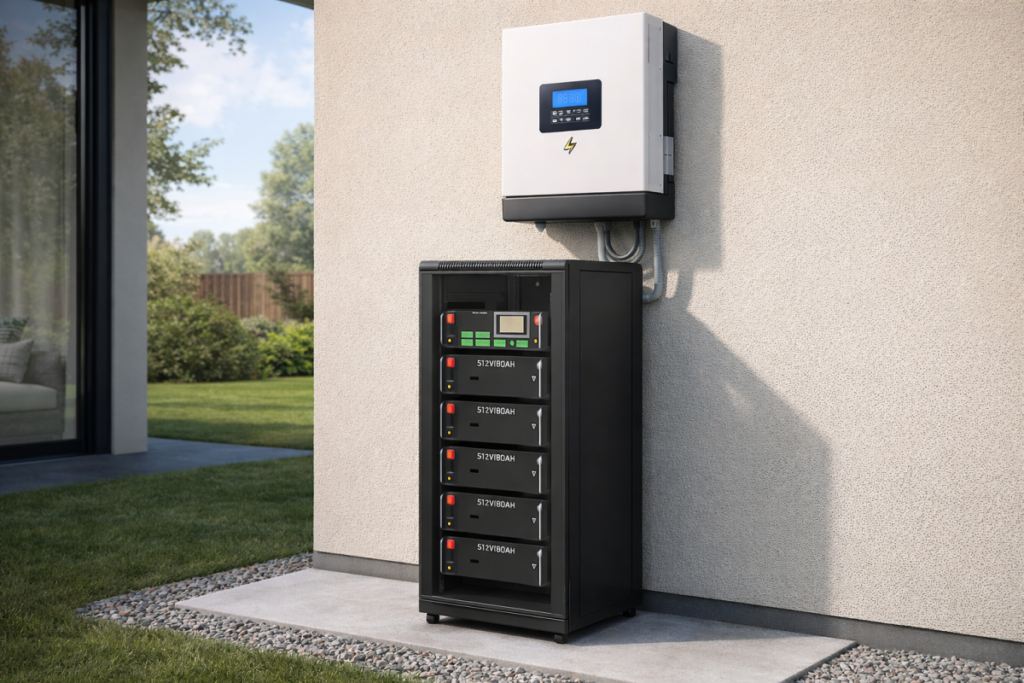
48V 100Ah rack-mount batteries These are modular, server-rack style units, typically delivering 5.12 kWh nominal capacity per module (around 4.8–5 kWh usable at 90–95% depth of discharge). Pros: Highly scalable — you can parallel multiple units (2–16+) depending on the inverter. Easy to service and expand later. Good thermal management when installed in a rack or cabinet. Cons: Requires a proper rack or enclosure, which adds some cost and floor space. Installation is slightly more technical. Typical use case: Medium to large homes or small commercial setups in Thailand and the Philippines where future expansion is likely. Offers good value per kWh when scaled.
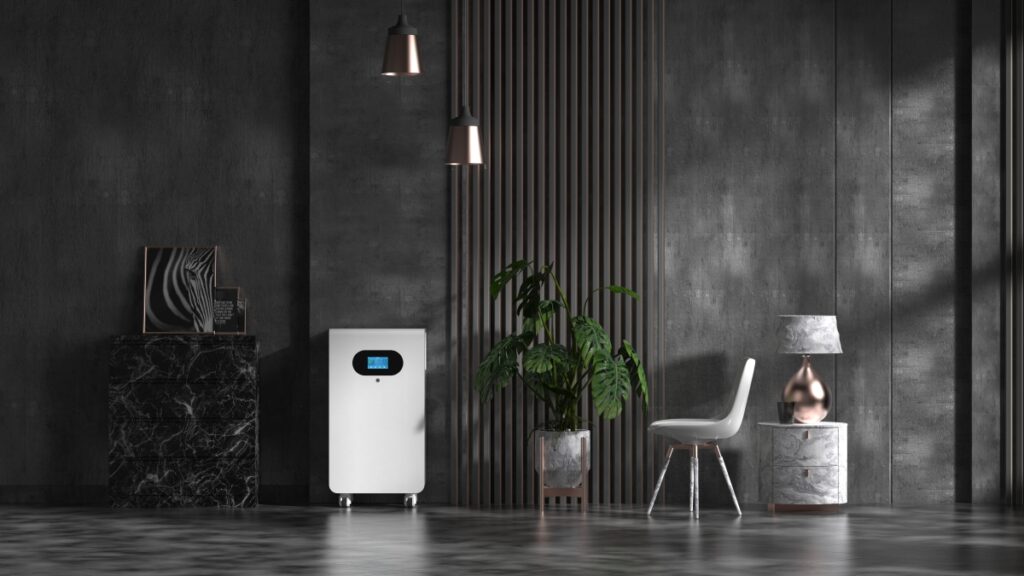
Wheeled/trolley-style batteries using 280Ah or 314Ah 3.2V cells (~14.3 kWh or ~16 kWh usable capacity) These larger-capacity wheeled cabinet batteries have gained popularity as higher-capacity cells become more affordable. A single unit can provide substantial daily cycling capacity. Pros: Higher energy density per footprint, built-in wheels for easier handling during installation, simpler cabling for single-unit setups, and competitive pricing per kWh. Cons: Significantly heavier (150–250 kg+), less modular if very fine capacity adjustments are needed later. Typical use case: Homes with high evening consumption or growing EV charging needs. Popular with distributors offering straightforward “one-cabinet” solutions that allow faster installations.
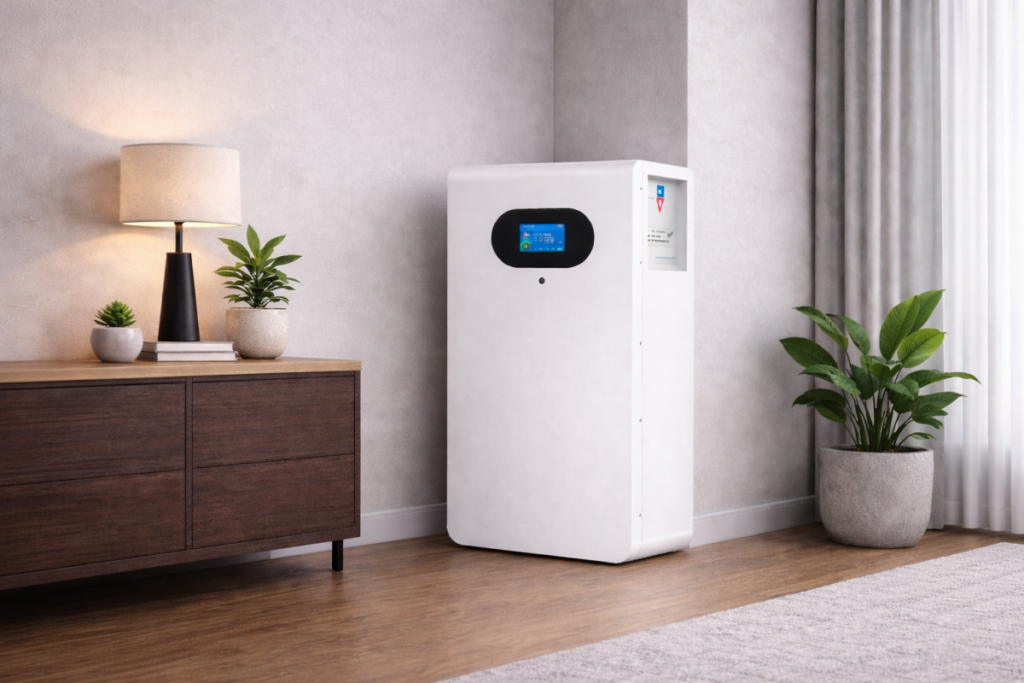
Less common small-capacity wall-mount batteries (e.g., 51.2V systems delivering around 10 kWh) These compact wall-mounted units are designed for space-constrained installations or smaller homes. Pros: Clean aesthetics, minimal floor space required, and often plug-and-play compatibility with certain hybrid inverters. Cons: Higher cost per kWh compared to larger rack or wheeled options. Limited scalability in some models. Typical use case: Urban homes or apartments in Bangkok, Manila, or Middle Eastern cities where floor space is limited and backup for essential loads (fridge, lights, fans, Wi-Fi) is the priority.
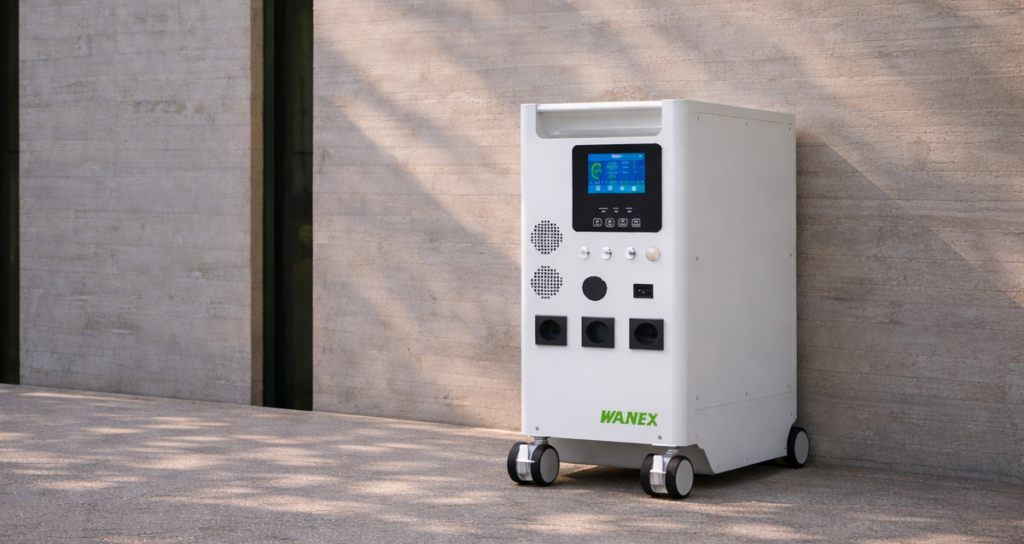
All-in-one ESS kits designed for specific purposes These integrated systems combine battery, hybrid inverter, and sometimes MPPT controllers or energy management software in one enclosure. Pros: Faster installation, simpler commissioning, and often include user-friendly monitoring apps. Ideal for standardized projects. Cons: Less flexible for future upgrades or mixing components. Repairing one failed part may require more specialized support. Typical use case: Entry-level residential projects or customers who prefer minimal complexity.
When recommending systems, always consider local climate (high ambient temperatures in Thailand and the Philippines require good thermal management) and the customer’s typical load profile.
Which LFP Battery Is Actually the “Best”?
In 2026, affordable LFP batteries have become highly homogenized. Most reputable suppliers use similar Grade A or B cells, and BMS functionality has standardized significantly. The real performance differences rarely come from marketing specifications alone.
The three factors that matter most are:
For installers and distributors, this means your real value lies in proper system design and customer education more than simply offering the cheapest or most expensive module. A well-installed mid-range battery will almost always outperform a premium unit that is poorly commissioned.
Most Common Real-World Scenarios for Home Battery Backup
Here are the four scenarios you will encounter most frequently when working with customers in Thailand, the Philippines, and the Middle East, along with realistic savings examples:
Time-of-Use / Self-consumption With declining or zero export compensation in many areas, storing daytime solar for evening use has become highly attractive. Example: A typical household in Thailand with an 8–10 kW solar system can shift 10–12 kWh daily into self-consumption, saving 4–7 THB/kWh depending on the tariff — often resulting in $300–650+ annual savings.
Peak-load shaving Batteries discharge during high-demand evening hours to reduce peak draw from the grid, helping avoid expensive time-of-use rates or demand charges.
EV charging from stored solar energy This is a rapidly growing application, especially in Thailand. Homeowners with rooftop solar and an EV increasingly want to charge their vehicle using stored daytime solar instead of expensive grid power. A 14–16 kWh battery can support significant daily EV driving, delivering clear fuel cost savings.
Power backup during grid instability In regions with frequent outages or unreliable supply (common in parts of the Middle East and some areas of the Philippines), a properly configured hybrid system provides seamless backup for essential or whole-home loads. The savings here come from avoided generator diesel costs — especially important with ongoing surging fuel prices.
Practical Guidance
For homeowners You do not need to become a solar expert. The smartest first step is to review your last 12 months of electricity bills. Pay attention to monthly kWh consumption and how usage patterns change across seasons (especially higher cooling loads in hot months). This data gives you a realistic idea of how much storage capacity makes sense — typically 1.5× to 2× your average daily evening and nighttime consumption.
For installers and distributors Focus on understanding the customer’s actual load profile, future plans (such as adding an EV), and local grid conditions. Recommend appropriately sized systems — oversizing increases upfront cost without proportional benefit, while undersizing leads to disappointed customers and more service calls. Prioritize correct inverter-battery communication, proper charge profiles, and clear handover instructions.
What to Avoid When Choosing a Home Battery
Conclusion
Home battery backup systems in 2026 work by intelligently storing excess solar energy and releasing it when it provides the most value — whether for self-consumption, peak avoidance, EV charging, or backup during grid instability. When properly selected and installed, they deliver tangible dollar savings through reduced grid purchases and improved energy resilience.
The key to success is not chasing the absolute cheapest or most expensive battery, but focusing on quality cells, solid assembly, and — above all — correct system design and operation tailored to local conditions in Thailand, the Philippines, and the Middle East.
In our next piece, we will share practical installation tips and best practices for hybrid inverters, cabling, commissioning, and ongoing system optimization to help installers and distributors deliver reliable, high-performing battery backup systems.
 by
by